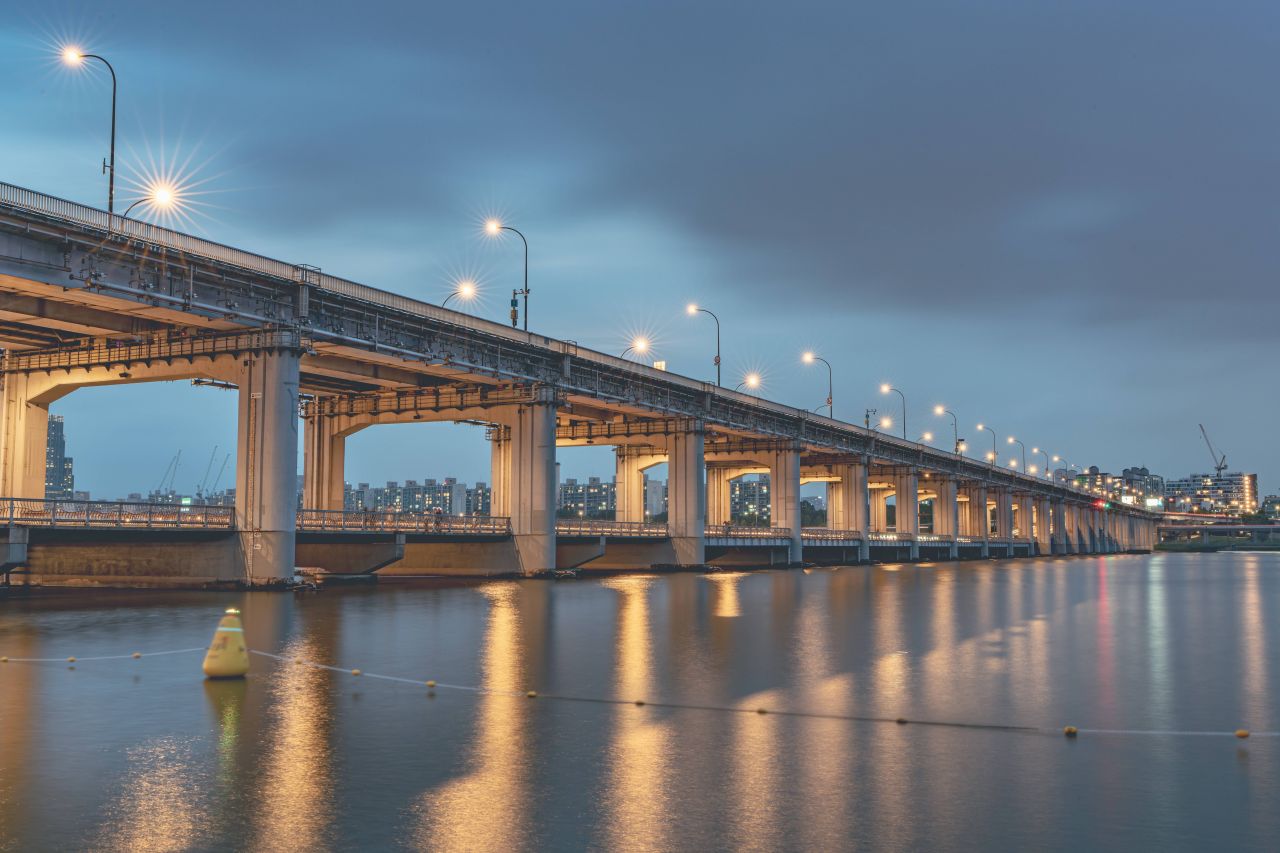
Your first warm evening in Seoul, the riverbank fills up: picnic mats, fried chicken boxes, beer cans. If you come from a country where an open container in a public park gets you a ticket, your first thought is the obvious one.
It's legal. Seoul publishes a list of 15 prohibited acts for Han River Park, and drinking is not one of them.
But there is a fine worth knowing about, and it starts at 1,000,000 won.
The list of 15, in full
The rules come from the Seoul Metropolitan Government Basic Ordinance on the Preservation and Use of Han River Park, Article 17, with penalty amounts set in its Schedule 3. The city publishes both.
| Prohibited act | Fine (1st / 2nd / 3rd offence) | |
|---|---|---|
| 1 | Damaging or killing trees and plants | 100,000 |
| 2 | Severe noise or odour, or drunken disorder | 70,000 |
| 3 | Not picking up after your pet | 70,000 |
| 4 | Unlicensed street vending | 70,000 |
| 5 | Dog off leash | 50,000 |
| 6 | Camping or cooking outside designated areas | 1,000,000 / 2,000,000 / 3,000,000 |
| 7 | Littering outside designated areas | 30,000 |
| 8 | Parking outside designated areas | 50,000 |
| 9 | Vending from a powered vehicle outside designated areas | 70,000 |
| 10 | Driving a powered vehicle off the roadway | 50,000 |
| 11 | Unauthorised cultivation | 100,000 |
| 12 | Picking flowers or fruit | 50,000 |
| 13 | Abusing or capturing wildlife | 100,000 |
| 14 | Leaving your rubbish behind | 100,000 |
| 15 | Prohibited fishing (Article 18) | 500,000 / 700,000 / 1,000,000 |
| 15 (cont.) | Same, using groundbait | 1,000,000 / 2,000,000 / 3,000,000 |
All amounts in Korean won. Only two items rise with repeat offences; the rest are flat. Nowhere on the list is "drinking alcohol."
Read the other direction, the list says something useful to people who don't drink at all. Only item 2 mentions alcohol, and even that one is really about noise. The other fourteen cover the dog off its leash, the litter, the flowers picked, the car left where it shouldn't be. They apply to anyone on that grass. Most of this is about being in a park, not about drinking in one.
The rule catches what comes after the drink
Item 2 reads:
Causing severe noise or odour, or being drunk and disorderly, in a way that causes others disgust or unease, or risks causing them harm → 70,000 won
Two things follow from that sentence.
Noise and drunkenness are one item, not two. You are not fined twice for doing both.
The second half is a condition. Being drunk is not enough on its own. It has to cause others disgust or unease, or risk harming them. Drink quietly, leave quietly, and this clause does not reach you.
One oddity, for anyone who likes checking primary sources: the ordinance text and the penalty schedule do not match. The 2015 schedule reads "drunk and, without reason, disorderly toward others"; the 2021 amendment to the article itself dropped "without reason." No document I found settles which wording governs in practice.
The fine that should worry you is for fire
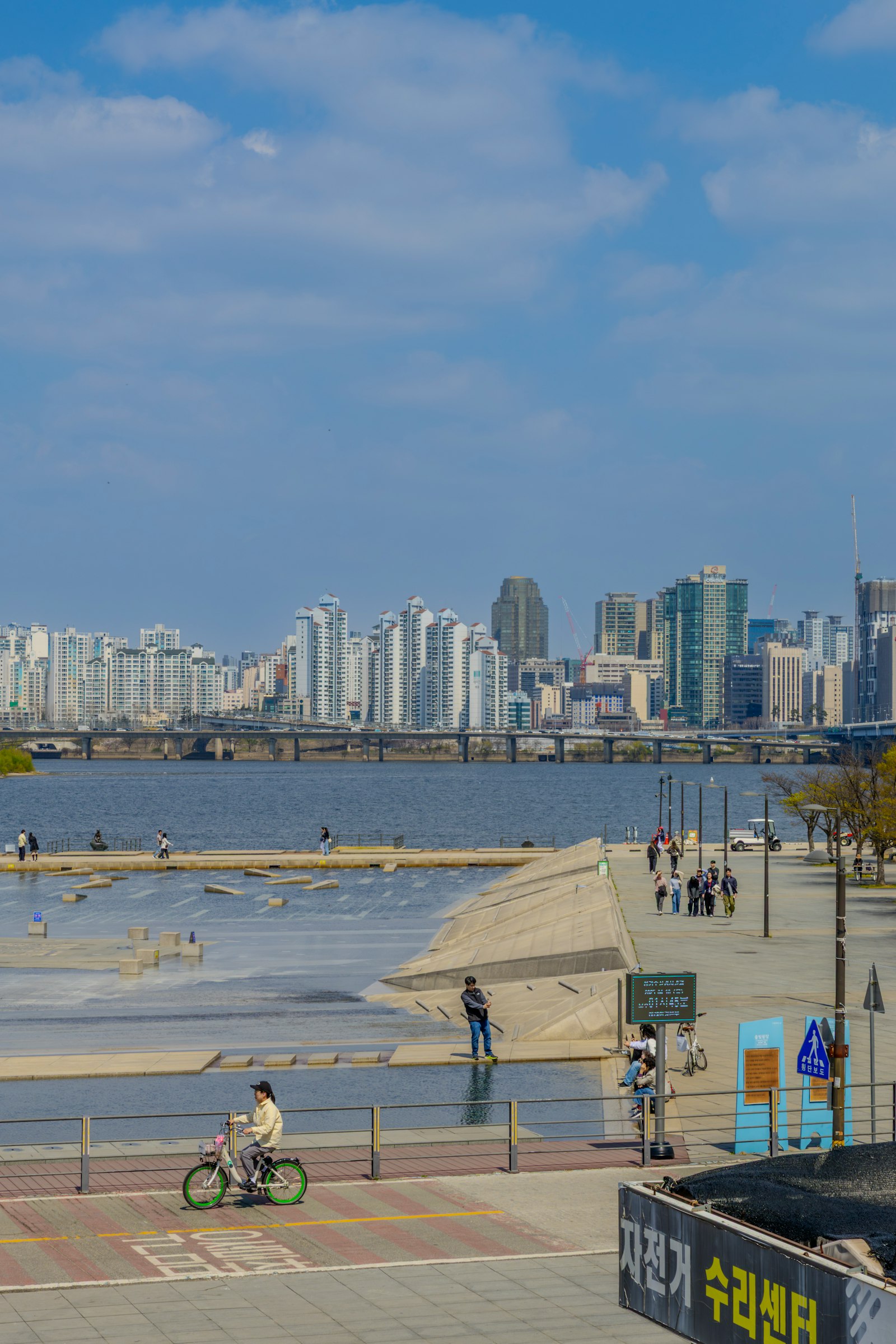
Item 6, cooking outside a designated area, starts at 1,000,000 won. That is fourteen times the fine for drunken disorder, and it rises to 2,000,000 for a second offence and 3,000,000 for a third.
So a portable gas burner is the expensive thing on that grass, not the beer. Skip it. Nothing else a picnicker is likely to be carrying sits at 1,000,000.
Rubbish splits two ways. Dropping it costs 30,000 won. Leaving it behind costs 100,000, more than three times as much for walking away from it.
The heavy end of the list sits where the complaints are. In a 2023 survey of 1,000 Seoul adults by the city council, 72.1% named "food and general waste left behind" as a bad experience at the Han River.
Isn't the Han River going dry?
You may hear this from Korean friends. There is a real law behind it. It has not reached the river.
Korea's National Health Promotion Act was amended on 29 December 2020 and took effect on 30 June 2021. It lets local governments designate public places as alcohol-free zones, with fines up to 100,000 won.
Seoul did propose an ordinance to make Han River Park eligible. The city council never even put it on the agenda, citing a lack of public consensus. In the same 2023 survey, 60.1% of respondents said they did not agree with designating the Han River as an alcohol-free zone.
During COVID-19 some stretches were temporarily closed to drinking, but that ended with the emergency. If someone tells you the ban is already in force, that is the memory they are working from.
Elsewhere in Seoul, the rules change
Elsewhere in Seoul there are genuine alcohol-free zones, and the rules there are stricter in a way that surprises people.
- Gwangjin District — Jangdokgol Park (October 2023), Gingorang Park and Mugunghwa Park (May 2024)
- Dongdaemun District — Cheongnyangni Station plaza and surrounds
In those zones you can be fined without drinking anything. Both districts made "possessing an open bottle" punishable in itself, alongside drinking from anything other than the bottle it came in. Han River Park has no such rule.
Enforcement is thin, though. At Jangdokgol Park, the first the district designated, two fines had been issued as of July 2024. A district official put it plainly: "Catching people in the act isn't easy, and even those two came from resident complaints." Patrols happen once a week, alongside smoking enforcement.
(District lists change. This reflects reporting from July 2024; check the district office notice before you go.)
A confusing third category
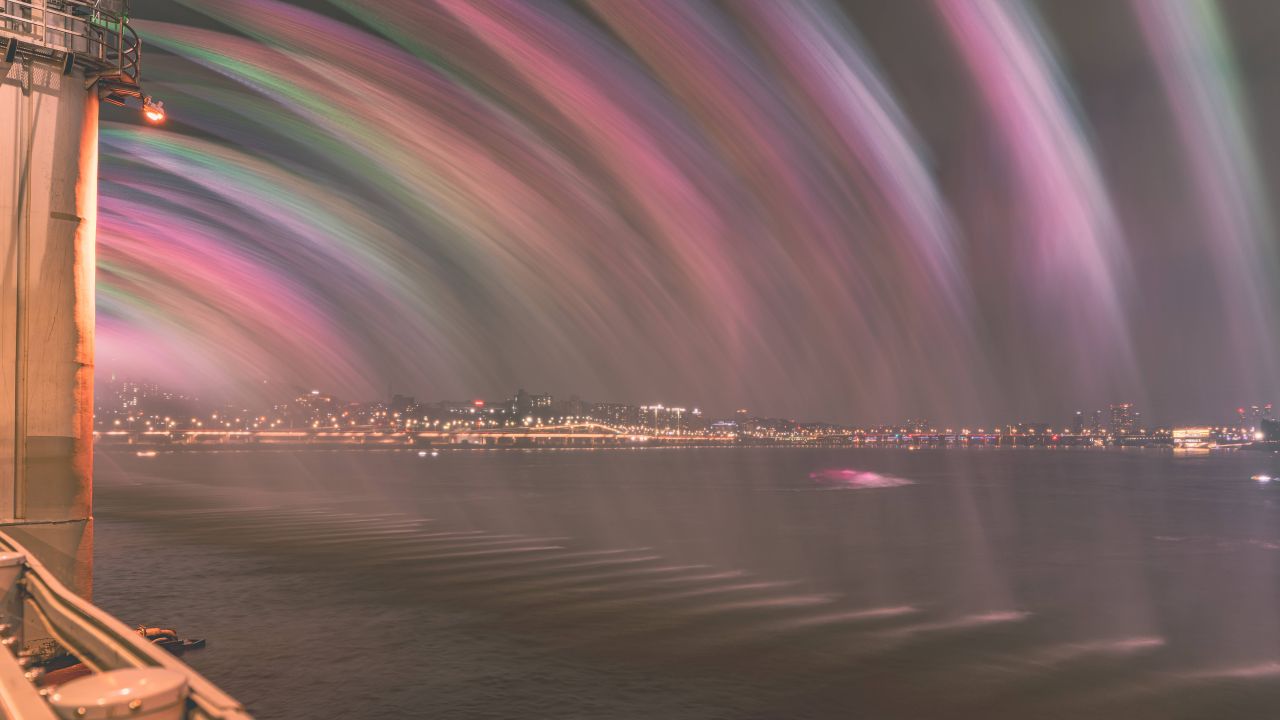
Seoul also has a third category: 22 city-run parks designated "clean drinking zones" under a 2017 ordinance, enforceable since April 2018.
| Legal basis | What is prohibited | Fine | |
|---|---|---|---|
| Alcohol-free zone | National Health Promotion Act | Set by the district. Can ban drinking itself | up to 100,000 |
| "Clean drinking zone" | 2017 Seoul ordinance | "Drinking and causing severe noise or odour…" | up to 100,000 |
| Han River Park | Han River Park ordinance | "Being drunk and disorderly…" | 70,000 |
The amounts are similar; what they prohibit is not. Two of the three ban the behaviour, not the drink. Only a designated alcohol-free zone can ban drinking itself.
And the enforcement record is telling: across those 22 parks, zero fines in six years. A city official explained why:
Because the penalty is for the harm caused by drinking, such as shouting, rather than for drinking itself, it isn't easy to establish a clear violation. Even when we do patrol, most cases end in a warning.
Where to go, and what to do there
Any Han River park works under the same ordinance, but two are easy on a first visit. The city's own directions pages give the exits.
- Yeouido Hangang Park. Yeouinaru Station (Line 5), Exits 2 and 3, one minute on foot. Four convenience stores, 24 toilets
- Banpo Hangang Park, the one in the photographs above. Express Bus Terminal Station (Lines 3, 7, 9), Exits 8-1 and 8-2, about fifteen minutes on foot. Two convenience stores, seven toilets
If you are still working out the subway, the transit card is the easy part.
Neither park lists a cooking area, and both print the same line in their visitor guidance: do not cook. That is the 1,000,000-won item.
Sun shelters are a separate matter from camping. Banpo has two designated sun-shelter zones, upstream and downstream of Banpo Bridge, free and open March to November. Outside those zones, the guidance is to observe the permitted locations.
The short version
- You can drink. It is not among the 15 prohibited acts
- Don't light anything. Cooking outside a designated area starts at 1,000,000 won, and neither park has one
- Take your rubbish with you. Leaving it costs 100,000; dropping it costs 30,000
- Keep the volume down. Noise and drunken disorder are the same 70,000-won item
- Don't go into the water after drinking. That one isn't about fines
The limits of this article
This is a reading of the published ordinance and the city's own page, not a report from the ground. How enforcement actually works, and where officers let things go with a warning, is beyond what they cover.
The penalty schedule dates from 8 October 2015. The ordinance text was amended 30 December 2021, and the city page was last updated 6 March 2025. The alcohol-free-zone bill is still sitting in the council. Read this as September 2026 and check the official page if you're arriving much later.
Get there before sunset, find a spot, and put the rubbish bag somewhere you will not forget it. Then stop reading rules.
Autumn is the season for this: cool enough to sit on the grass, warm enough to stay until the bridge lights come on. 치맥 by the water is comfort food here, and the evening itself needs no permission.
A whole fried chicken and a few beers is not a one-person order. That is half the reason chimaek happens at the river at all, and if you are travelling alone, the seat I take when I am eating by myself solves a different version of the same problem. The rules at a Korean BBQ table are the indoor cousin of this article.
Do it with a local Akasha, an app for finding local meetups and experiences in Korea, is where people list what's happening nearby on the day you're actually free, sound baths to Sunday hikes, alongside trips from registered Korean travel companies: iOS / Android
One question for the comments, and I do read them: what surprised you about drinking rules here compared with home?
Who wrote this. I run Akasha and write this blog from Seoul. I haven't been fined at the Han River; the figures here come from the city's own ordinance and penalty schedule, read in September 2026. More at @akasha.korea.
Sources
- Seoul Han River Park, "Prohibited Acts (Fines)" — https://hangang.seoul.go.kr/www/contents/646.do?mid=427 (updated 2025-03-06, KOGL Type 1)
- Seoul Han River Park, Yeouido: facilities https://hangang.seoul.go.kr/www/contents/669.do?mid=473 · directions https://hangang.seoul.go.kr/www/contents/671.do?mid=476
- Seoul Han River Park, Banpo: facilities and sun-shelter zones https://hangang.seoul.go.kr/www/contents/663.do?mid=463 · directions https://hangang.seoul.go.kr/www/contents/665.do?mid=466
- Seoul Metropolitan Government Basic Ordinance on the Preservation and Use of Han River Park [in force 2023-12-29] [Ordinance No. 9034], Article 17 (amended 2021-12-30) and Schedule 3 (amended 2015-10-08)
- Seoul Metropolitan Government Ordinance on Creating a Healthy Drinking Culture (enacted November 2017)
- Kyunghyang Shinmun, "Zero fines in six years in Seoul's clean drinking zones," 2024-07-22 — https://www.khan.co.kr/article/202407220600101
- Seoul Metropolitan Government explanatory statement on the Han River alcohol-free zone proposal — https://mediahub.seoul.go.kr/archives/2004045
Photographs are KOGL Type 1 works from the Korea Tourism Organization's PhotoKorea; photographers are credited beneath each image.