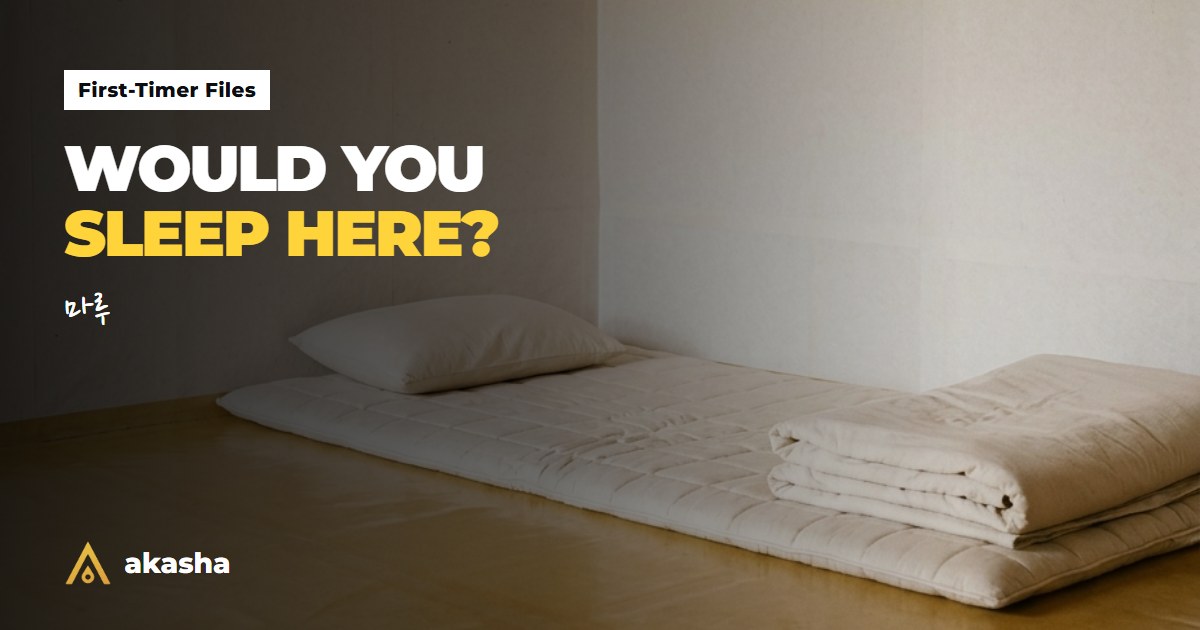
A hanok stay is a night in a traditional Korean house, usually wooden, with a yard in front, and it's worth one night of a Korea trip.
Before you book, decide which kind of hanok you want: an older-style house, where you'll probably sleep on a floor mat and may walk outside to reach the bathroom, or a modern one with a bed and a bathroom of its own. Bedding and bathrooms change from house to house, so find those two lines in the listing before you look at anything else.
Picture the evening. The lattice doors are open to the yard, and a thin mattress is laid out on the floor of your room. For some travellers, that picture is the whole reason to go. If your first thought was where the bathroom is, that's the right first question.
Two kinds of hanok
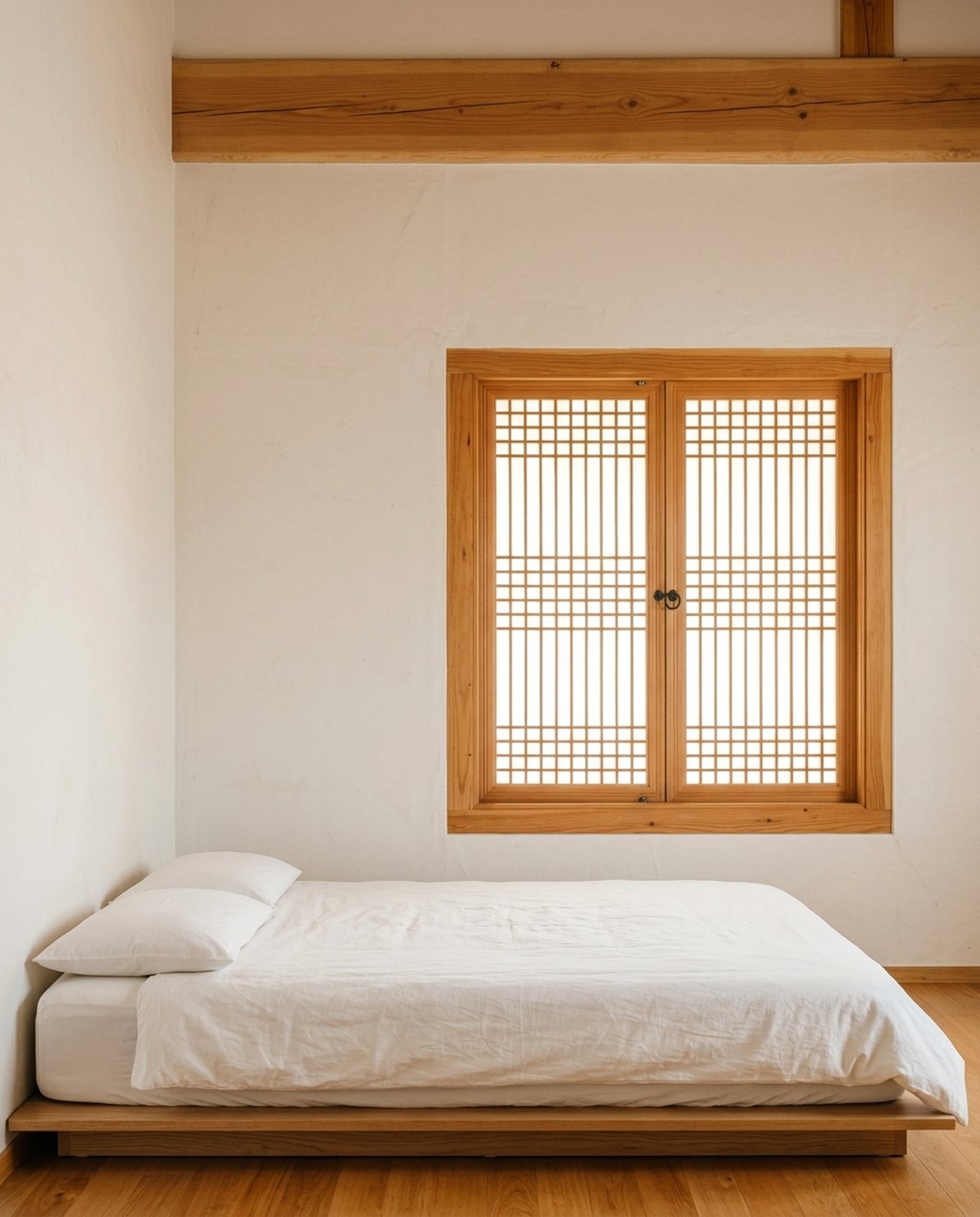
Hanok stays come in a wide range. In VisitKorea's guide to hanok accommodation they run from traditional houses to contemporary ones, and from large houses in the countryside to small ones in the city. The modern, updated kind is often called a hanok hotel.
For your night, the split is simpler than that. In a traditional hanok you'll likely sleep on the floor, and the bathroom is often in a separate building, so you step outside to use it. Many modern hanok have beds. Renovated places tend to have a private bathroom and air-conditioning, while some smaller guesthouses share a bathroom between rooms.
Some houses also offer extras, such as a tea ceremony or a cooking class. Nice to have, but they won't change where you sleep. Settle the house first.
What to check before you book
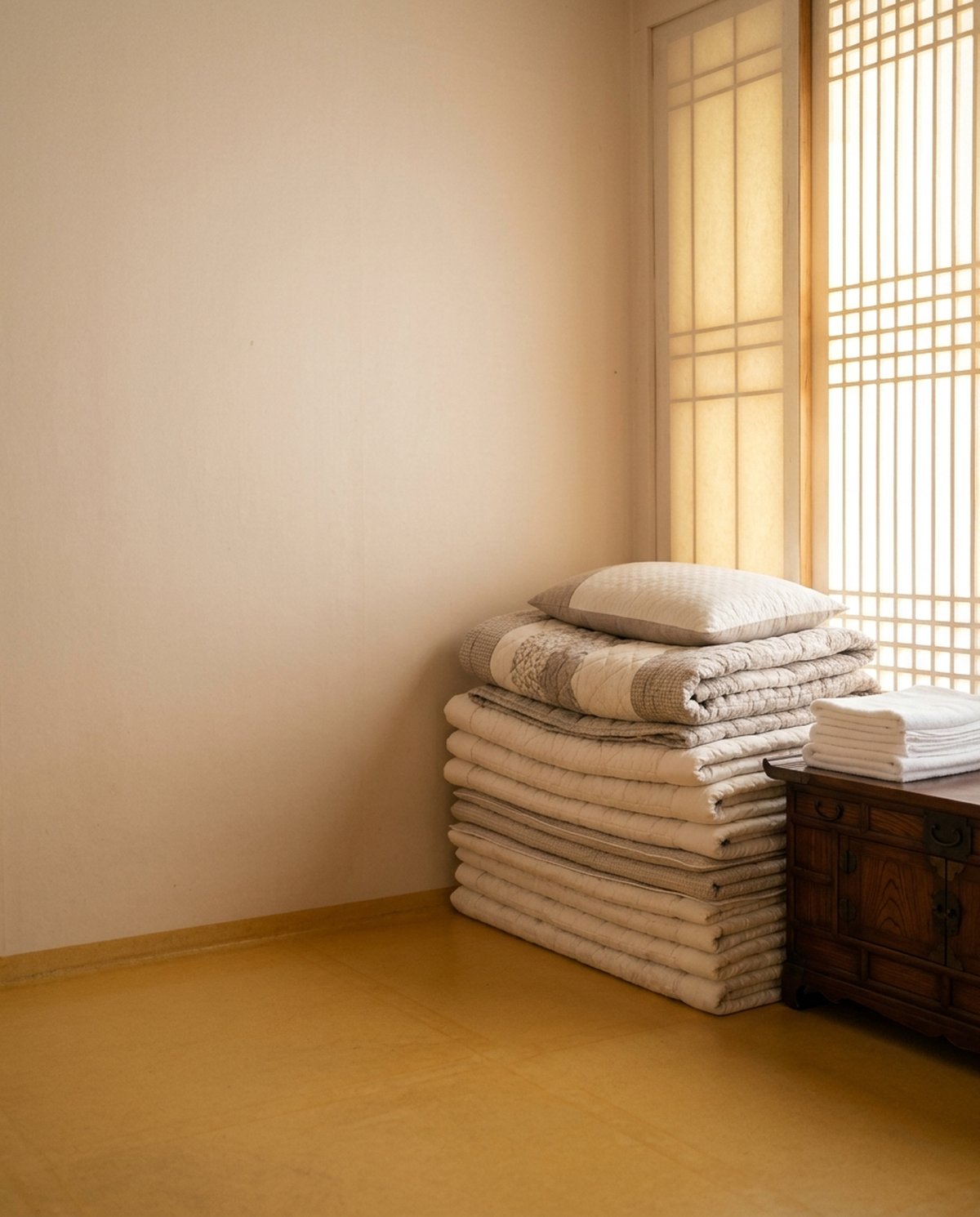
Start with what you'll sleep on. If you want a bed, look for a room that offers one. Then the bathroom: inside your room, shared, or in another building. Skim the facilities list too. Some hanok may not have modern conveniences, so check before you book.
Hanok rooms turn up on booking platforms that let you filter for them, and there's a Seoul hanok portal as well. You'll find stays in Bukchon in Seoul, Jeonju Hanok Village, Gyeongju and Andong, among other places. Prices vary with the house and the season, and they change, so go by the current listing.
For general travel questions, the 1330 Korea Travel Hotline (+82-2-1330) answers in English and other languages. Anything about the house itself, ask the house.
Akasha Note Before you fall for the courtyard photos, check what you'll sleep on and where the bathroom is. If the listing doesn't say, ask before you pay.
Who may prefer a modern one
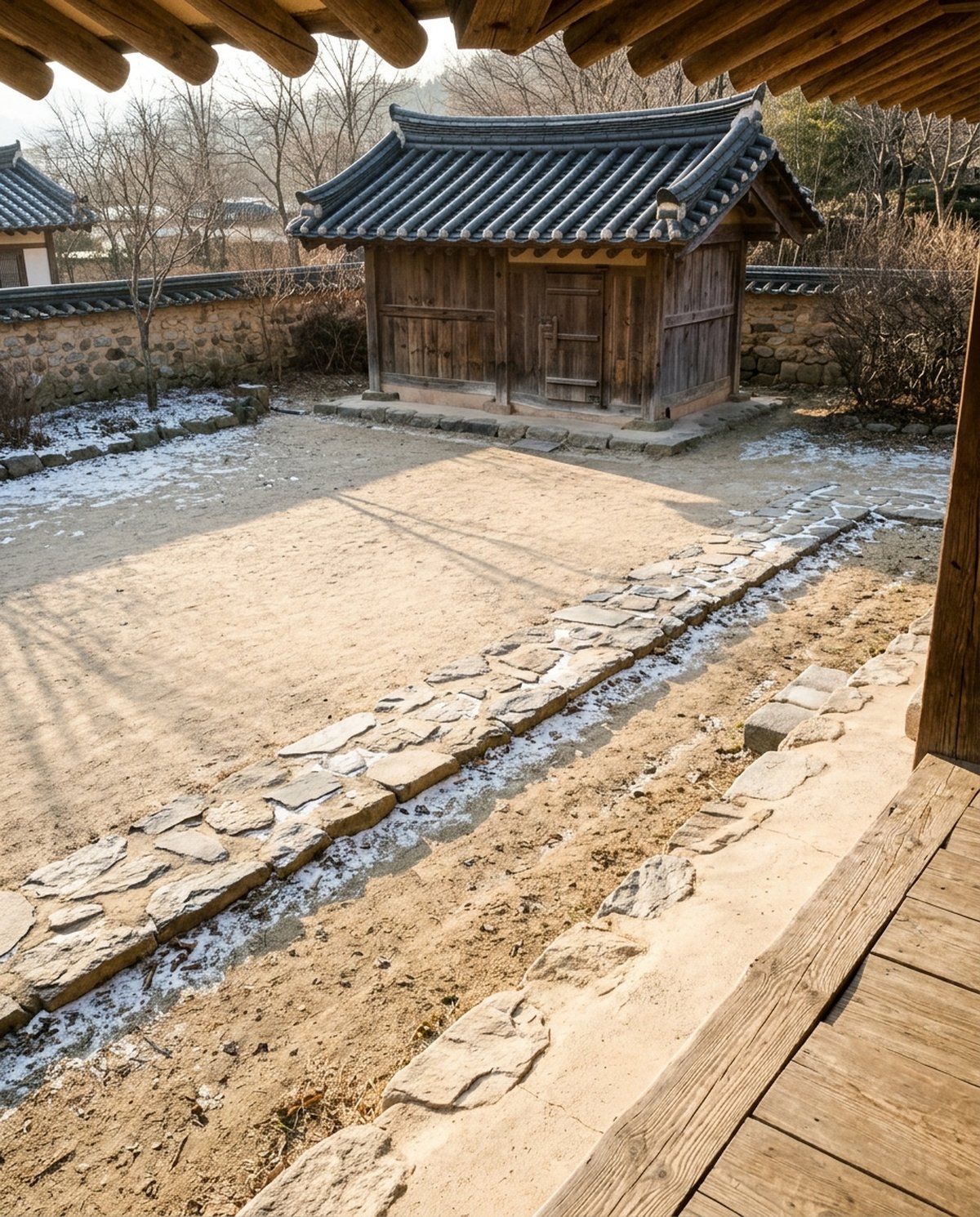
Coming in winter? Talking to the Korea Herald in 2011, the architect Cho Jung-goo said old hanok can be cold in winter, "but this can be solved with money." If you'll be there in the cold months, read what the listing says about heating, and see how an ondol floor is heated.
Rather not walk outside at night? Then the bathroom line matters more than the photos. In a traditional hanok it's often in another building across the yard. A 2016 KoreaJoongAng Daily feature told of one resort that added attached bathrooms after guests complained about walking to shared ones.
And if you already know you'd rather have a bed, book a room that has one.
Even so, if the yard and the open wooden hall are why you want a hanok at all, I'd book the traditional house. Just book it knowing about the floor and the walk.
Arriving: start in the yard
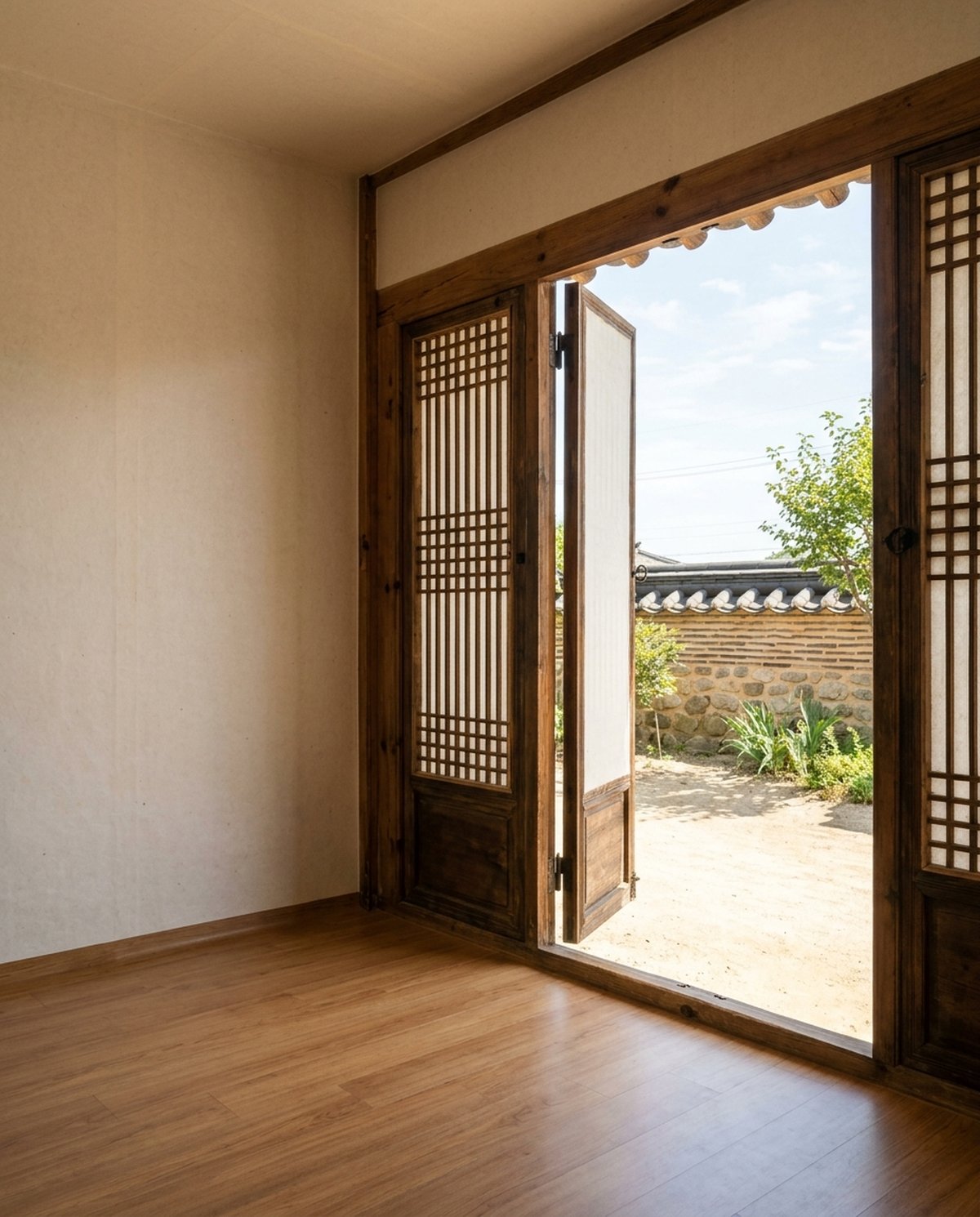
Hanok are typically wooden, and in many of them the doors and windows look straight out onto a front yard. When you arrive, take a minute in the yard before you go in. The room doors open onto it, so that's where you'll see how the house fits together.
In a traditional house, that courtyard, the madang, is enclosed. Cho described it as the space for everyday life and for festive occasions alike.
마루, the floor between the rooms
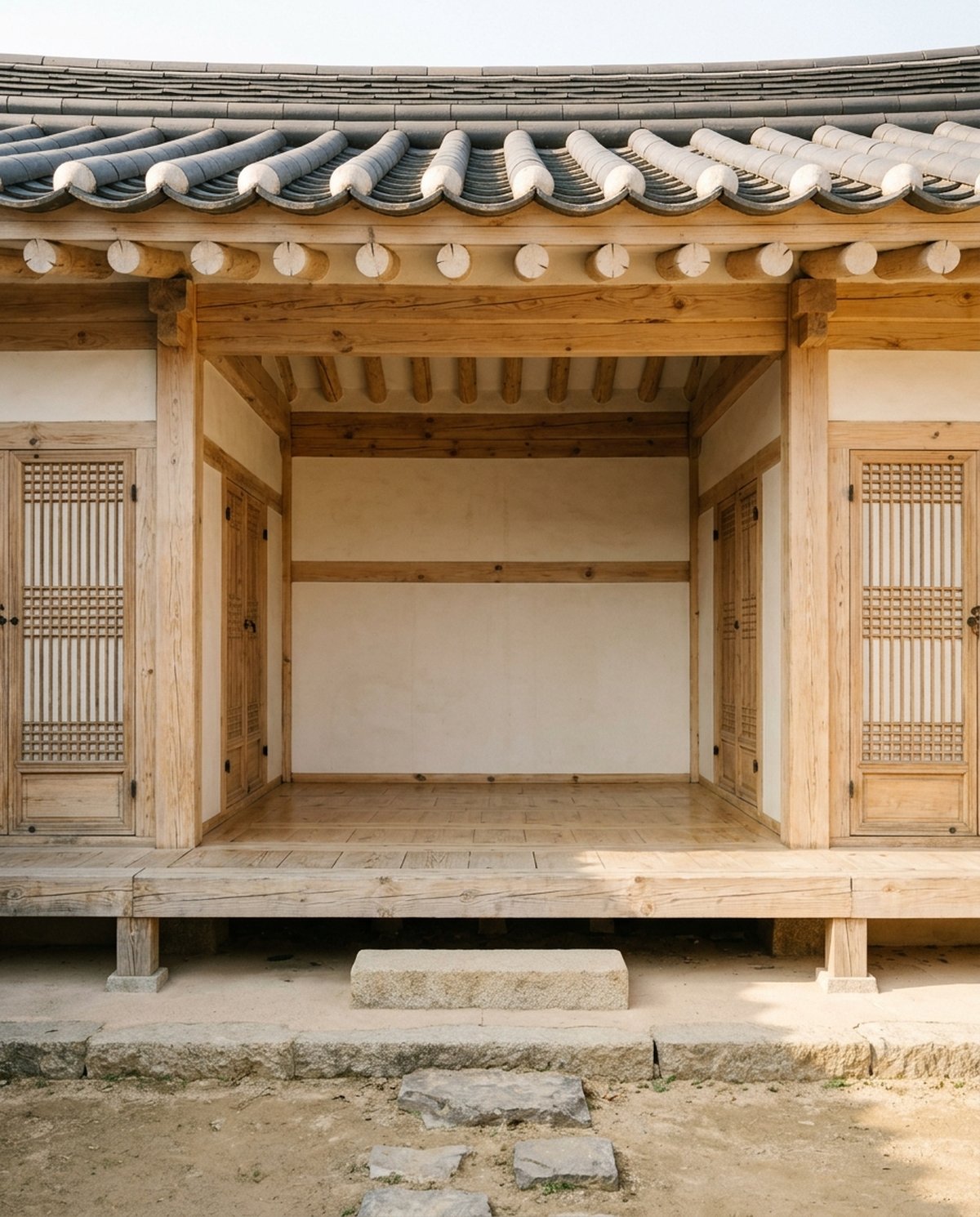
The open wooden hall in the middle of a traditional hanok has a name: 마루, maru.
The Standard Korean Dictionary defines it as boards laid inside a house with a gap beneath, or the place where those boards are laid. In the traditional layout it sits between the two main rooms. Cho explained how the two were used: the rooms mainly in winter, the maru as the all-purpose space in summer.
That's worth knowing before you go: a traditional hanok was lived in season by season, and the maru belonged to summer.
The dictionary has a second 마루 as well, meaning the top of a roof or a mountain ridge. Same spelling, different word. If a maru matters to you, look for it in the listing photos.
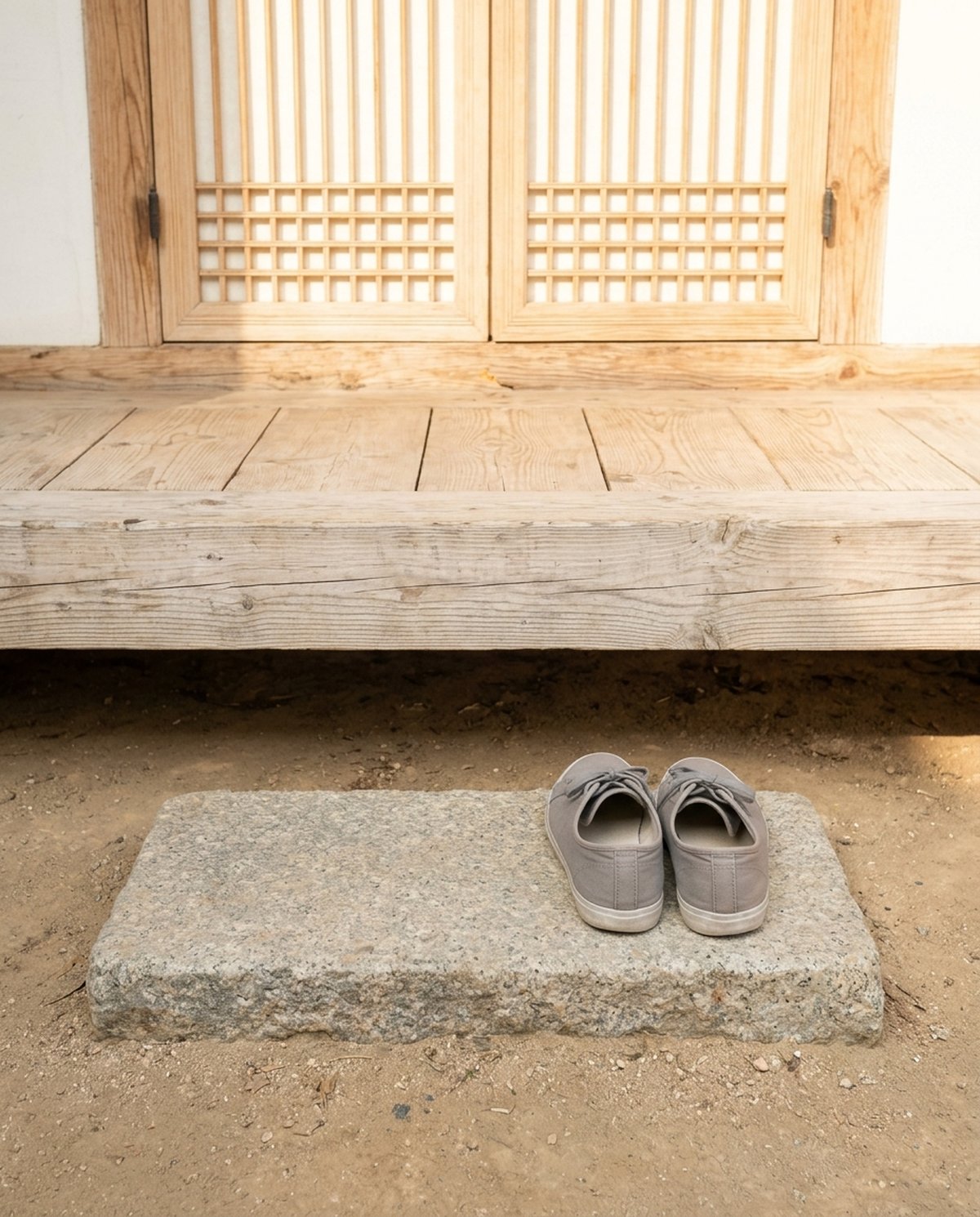
Two habits to bring with you. At many hanok, shoes come off at the entrance, so wear a pair that slips off easily. And because hanok are built of wood, take care with fire. Some are designated cultural assets, so go gently with the doors and floors.
If you want to know why shoes and heated floors go together, the ondol post covers it.
Will you sleep on the floor?
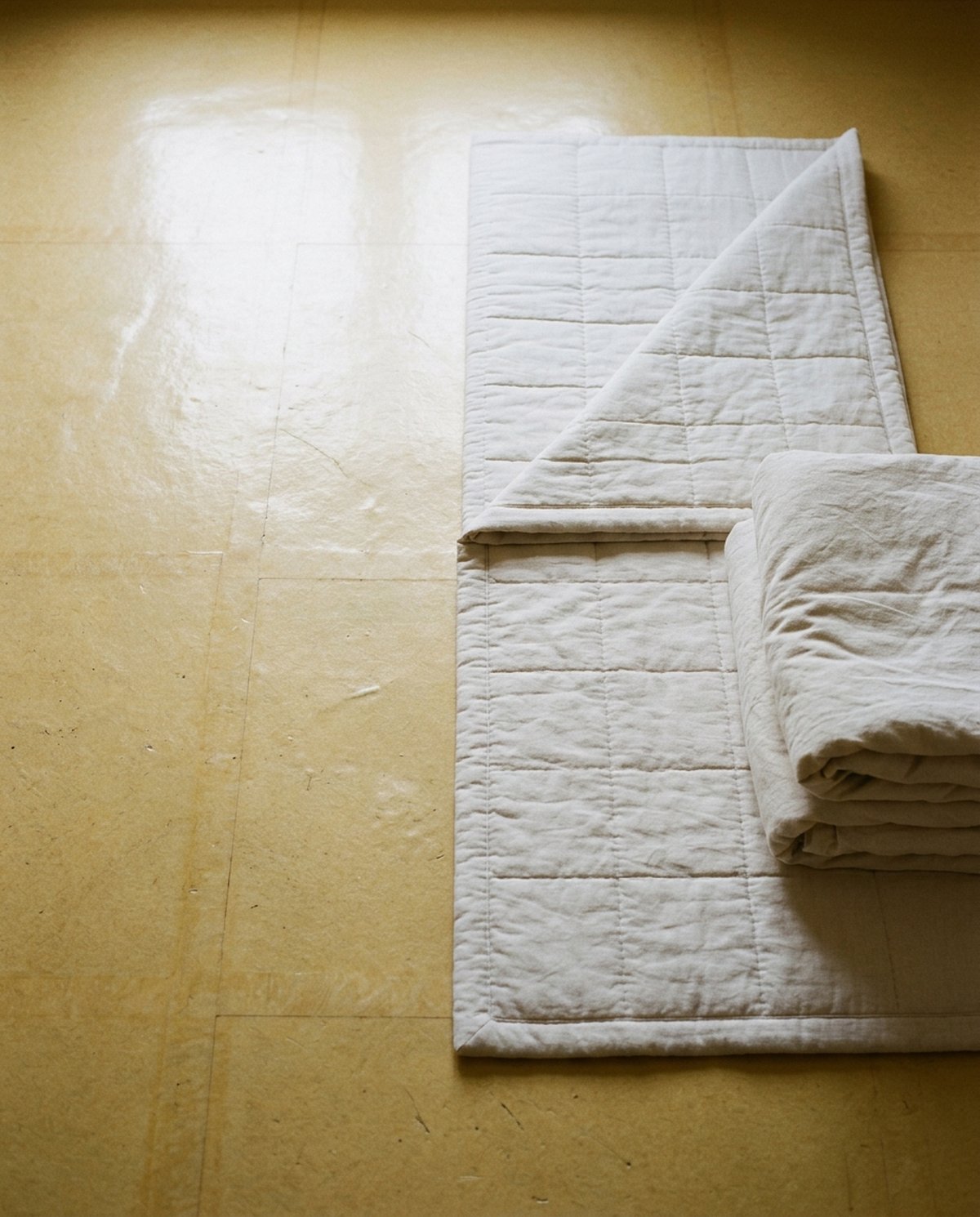
In an older house, probably, and at some stays the bedding is spread out at night.
So don't be surprised if the room looks bare when you first walk in. If you're not sure whether the bedding is laid out for you or waiting folded in a corner, ask when you arrive.
The first morning
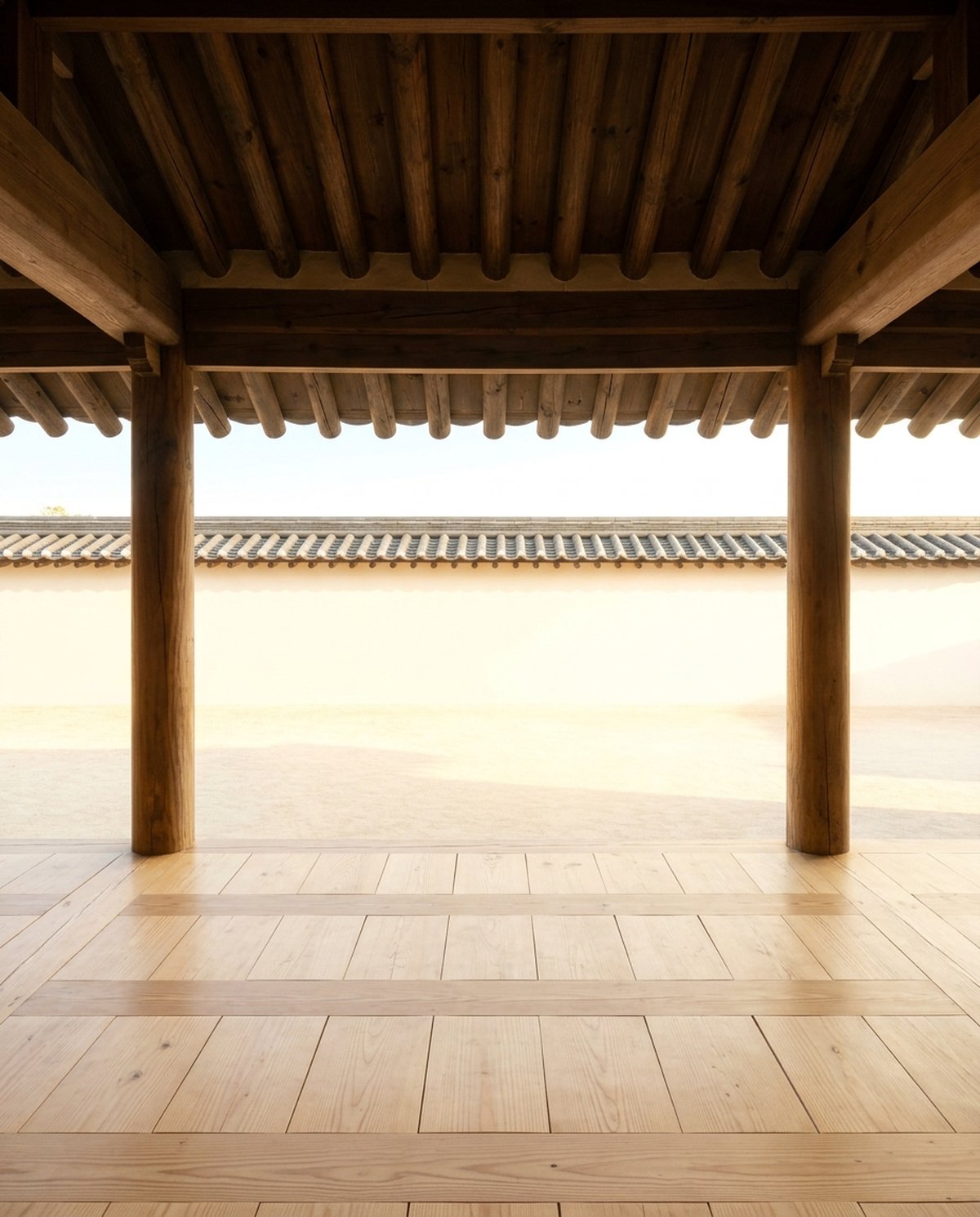
At some stays, the bedding is folded away by morning. Then step out onto the maru, if your house has one, and look at the yard from the floor that, in the old layout, was the house's summer room.
The short version
- Pick the kind of hanok first. Older-style houses often mean floor mats and a bathroom in another building; many modern ones have beds and their own bathroom
- Find two lines in the listing: bedding and bathroom. Ask if either is missing
- Be ready to take your shoes off, and take care with fire in a wooden house
- Learn one word: 마루, maru, the open wooden-floored hall of a hanok
Send this to whoever you're travelling with before one of you books the house.
For a walk through Seoul's best-known hanok streets, see Bukchon or Ikseondong. And for another kind of night away, there's a templestay, hour by hour.
Do it with a local Akasha is an app for finding local meetups and experiences in Korea. Look for a small gathering hosted by locals, or a free one where you can practise Korean. iOS / Android
One question for the comments, and I do read them: old house or modern one, which would you book for your first hanok night, and what would make you switch?
Who wrote this. I run Akasha and write this blog from Seoul. This piece is a reading of VisitKorea's hanok accommodation page, the Standard Korean Dictionary, a 2011 Korea Herald interview with an architect, a 2016 KoreaJoongAng Daily feature and an Outlook Traveller guide, read on 18 November 2026. It is not a report from a stay. More at @akasha.korea.
Sources
- VisitKorea, "Hanok Accommodations" (a hanok is a traditional Korean house; typically wooden with a front yard seen from the doors and windows; traditional to contemporary, large countryside houses to small city ones; many use mats and blankets on the floor instead of beds; look for rooms that offer beds; many modern hanok have beds; some offer programs such as tea ceremony or cooking; some may lack modern conveniences, check before booking; wood, so be careful with fire; some are cultural assets; Bukchon, Jeonju Hanok Village, Gyeongju and Andong; hanok filters on booking platforms and a Seoul hanok portal; 1330 Korea Travel Hotline; page last updated 2026-09-28): https://english.visitkorea.or.kr/svc/contents/contentsView.do?vcontsId=140678 (read 2026-11-18)
- National Institute of Korean Language, Standard Korean Dictionary, entry 마루 (마루3, boards laid inside a house with a gap beneath; 마루1, the top of a roof or mountain ridge): https://stdict.korean.go.kr/search/searchResult.do?pageSize=10&searchKeyword=%EB%A7%88%EB%A3%A8 (read 2026-11-18)
- Kim Hoo-ran, "Architect dispels myths about hanok", The Korea Herald, 2011-05-05 (architect Cho Jung-goo: maru as the open wooden floor space between the two main rooms; rooms used mainly in winter, maru in summer; the enclosed madang for everyday and festive use; cold in winter, "but this can be solved with money"): https://www.koreaherald.com/article/10339682 (read 2026-11-18)
- Yang Bo-ra, "For your next getaway, stay at a hanok hotel", KoreaJoongAng Daily, 2016-02-26 (traditional hanok tend to have no beds; modern updated hanok called hanok hotels; bathrooms often in separate buildings; one resort added attached bathrooms after complaints): https://www.koreajoongangdaily.com/korea/for-your-next-getaway-stay-at-a-hanok-hotel/10554114 (read 2026-11-18)
- Outlook Traveller, "Inside A Hanok Stay: What It Is Like To Sleep In A Traditional Korean House" (bedding spread out at night and folded away in the morning at many places; shoes removed at the entrance; shared bathrooms in some smaller guesthouses; renovated hanok with private bathrooms and air-conditioning): https://www.outlooktraveller.com/stay/inside-a-hanok-stay-what-it-is-like-to-sleep-in-a-traditional-korean-house (read 2026-11-18)
Images: generated for this article. They show no real house, guesthouse or brand.